Harugogo, Fort Portal
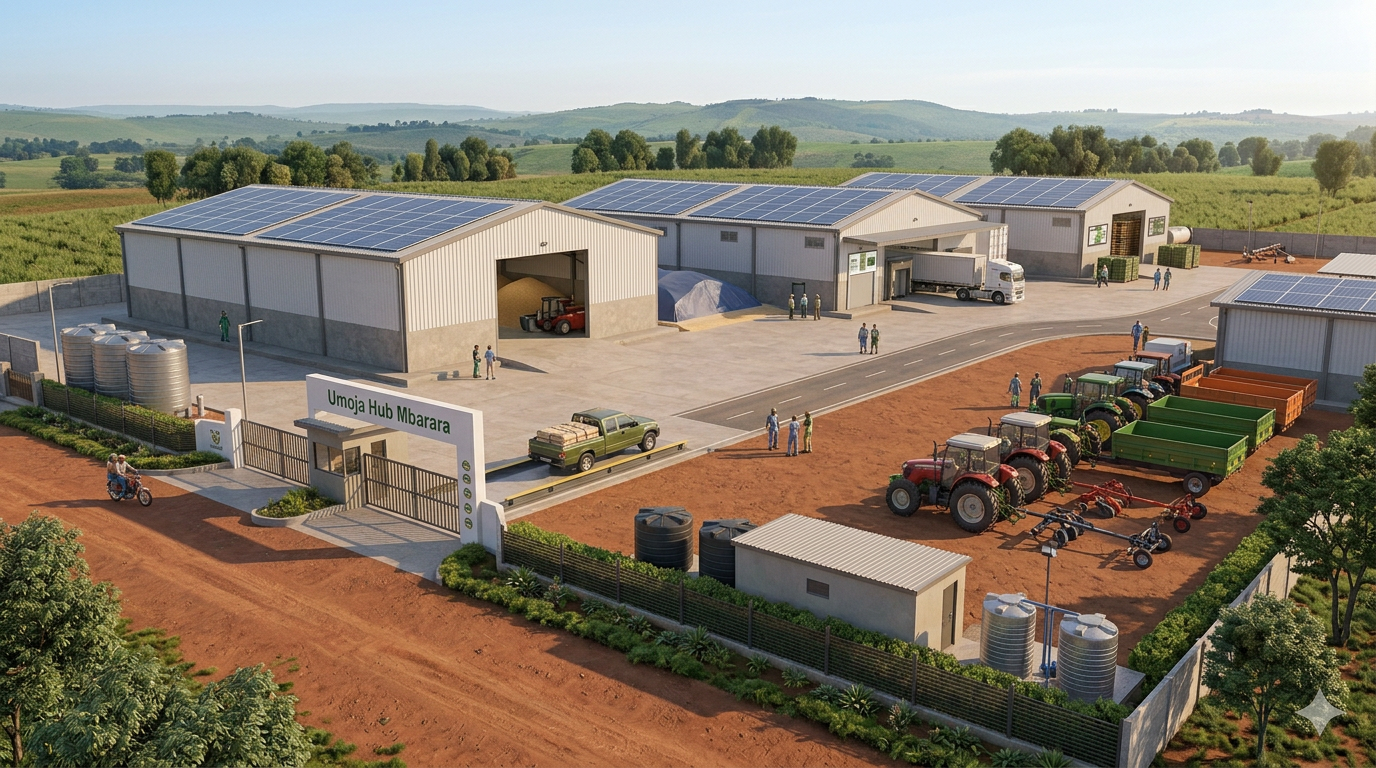
Umoja Hub, Harugongo is an upcoming integrated agricultural hub being developed to serve the fertile farming communities around Fort Portal and the wider Tooro highlands. Designed as a resilient, mixed-commodity hub, it will support farmers with aggregation, storage, farmer services, market linkage, and practical value-preserving infrastructure in one coordinated location. Harugongo is well positioned for this model because it sits within a productive agricultural landscape known for bananas, beans, onions, Irish potatoes, vegetables, and dairy activity. Umoja Hub will help turn that natural strength into a stronger system for quality, income, and long-term market access.
About This Hub
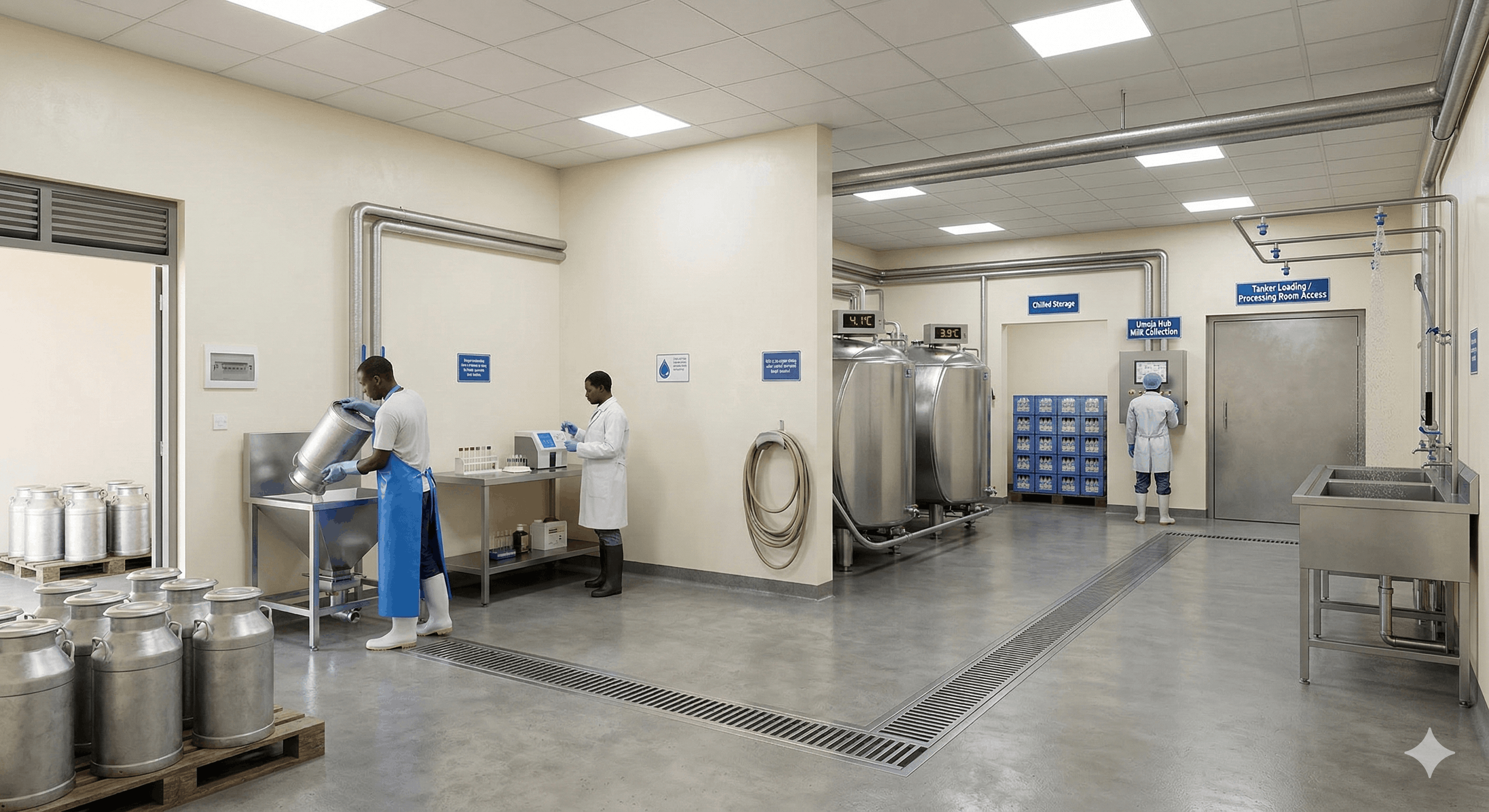
This hub is being designed as more than a storage site. It is being built as a working agricultural service platform where farmers can bring produce, access support, reduce losses, and connect to better buyers. By combining dry storage, produce handling, ambient specialty storage, and dairy support functions, Umoja Hub, Harugongo will help preserve value after harvest and improve the way agricultural products move from farm to market. The goal is simple: help farmers earn more by losing less, timing sales better, and producing for stronger demand.
As one of the upcoming Umoja pilot hubs, Harugongo will also help demonstrate a smarter way of planning agriculture. The hub will not only respond to what farmers already grow well, but also use market intelligence, buyer signals, and purchase trends to identify opportunities for future contract farming. That means Umoja can organize production around crops where demand is expected to strengthen over time, helping farmers prepare early and participate in more rewarding value chains. Instead of reacting late to market shifts, the hub will be designed to help farmers move early, produce with confidence, and grow with purpose.
Why Harugongo?
Harugongo is a strong location for a pilot hub because it brings together several things that matter: productive land, active smallholder farming, proximity to Fort Portal, and a crop mix that supports both food security and commercial opportunity. The area is already associated with bananas, beans, onions, Irish potatoes, and vegetables, while the wider Kabarole and Tooro region also has strong dairy, coffee, and tea potential. That makes Harugongo ideal for a hub model that needs both volume and diversity.
A successful agricultural hub needs more than a good building. It needs a region with real farming energy, reliable throughput, and room to grow into future value chains. Harugongo offers exactly that. It can serve as a collection point for staple crops, a handling center for vegetables, a support node for milk collection, and a launch point for higher-value crops over time.
Umoja Hub, Harugongo will be built around a balanced portfolio of traditional crops, commercial horticulture, and dairy support.
Traditional crops
These crops matter because they are already central to the local farming system and provide strong participation from smallholders.
Bananas
Beans
Maize
Cassava
These crops help create regular throughput for the hub, build trust with farmers, and support local and regional market demand.
Commercial and high-volume crops
These crops are especially important because they already have visible trade potential in and around Harugongo and Fort Portal.
Onions
Irish potatoes
Cabbage
Carrots
Other vegetables as volumes grow
These products need better handling, aggregation, and timing to reduce losses and improve prices, which is where the hub adds real value.
Future higher-value opportunities
Over time, the hub can support higher-value and more premium crop lines as farmer organization, storage, and buyer linkages deepen.
Coffee
Tea
Premium horticulture
Vanilla or other specialty crops where commercially viable
Livestock-linked value chain
The wider region’s dairy activity makes milk a natural secondary focus.
Milk collection support
Cooling coordination
Linkages to dairy buyers and processors
What makes this hub different
Umoja Hub, Harugongo is designed around the idea that storage is value preservation. Too often, farmers lose money not because they failed to grow, but because they lacked the systems to store, sort, handle, cool, or market their products properly. This hub is being developed to change that.
For grains and staples, the hub will provide safer aggregation and dry storage so farmers are not forced into immediate low-price selling. For vegetables and high-turnover produce, the hub will improve handling and help coordinate dispatch to stronger buyers. For fruits and specialty crops, the hub model includes ambient storage and controlled handling systems that help preserve quality before shipment. Not all value is protected through cold storage alone. Some crops need the right airflow, separation, cleanliness, stacking, humidity discipline, and movement planning to arrive in better condition and command better prices.
The hub is also designed to be resilient. That means it will not depend on one crop, one season, or one buyer. A resilient hub can handle staples, support vegetables, coordinate milk, and prepare for higher-value crops as demand evolves. This mixed model gives farmers more options and makes the hub stronger over time.
Smarter farming, guided by demand
One of the most exciting parts of the Umoja model is the use of advanced data analytics and global purchase trends to guide future production planning. Agriculture is changing, and the best opportunities increasingly go to those who prepare early.
At Umoja Hub, this means crop planning will not rely only on tradition. It will also be informed by market signals, buyer patterns, and forward-looking demand analysis. For example, if the hub identifies growing international demand for a crop such as chia seed, it can begin preparing farmers early through training, input planning, contract arrangements, and storage readiness. Instead of waiting for a market to mature and become crowded, farmers can be positioned ahead of the curve.
This approach creates a major shift:
Farmers move from uncertain selling to structured production
Hubs move from passive storage to strategic coordination
Buyers gain more reliable, better-organized supply
Agricultural regions become more investable and more responsive to future demand
What Umoja Hub, Harugongo will offer
Produce aggregation for staples and vegetables
Dry storage and value-preserving handling systems
Ambient storage for selected export-oriented and specialty products
Dairy support through milk collection coordination
Farmer onboarding and market linkage
Crop planning informed by buyer demand and market intelligence
A practical mixed-commodity model built for resilience and growth
Development Timeline
Site identification and selection finalised
Land acquisition or lease agreement executed
Target commodities and value chains agreed
Financial model and business case signed off
Site masterplan and layout finalised
Engineering and architectural drawings approved
Regulatory permits and licenses application started
Water, power and connectivity requirements mapped
Ground-breaking and civil construction underway
Core warehouse and service structures handed over
Silos, cold rooms or dry storage commissioned
Processing, grading or packaging equipment in place
Surrounding farmer cooperatives and groups identified
Target acreage committed by enrolled farmers
Agronomic and post-harvest training programmes started
Input supply and extension services operational
Buyer offtake agreements drafted or signed
Contract farming arrangements activated with farmers
Grading, testing and QC protocols operational
Warehouse receipt or inventory management system live
First commodity delivery received at the hub
First full storage and conditioning cycle done
First outbound shipment dispatched to buyer
Post-launch review completed and scale plan approved
Want to bring contract farming to Harugogo, Fort Portal?
We're looking for government partners, investors, and community leaders who share our vision of ending rural poverty through guaranteed markets.
Get InvolvedBacked by Capital. Driven by Community.
Strategic partners & institutional supporters