Mbarara
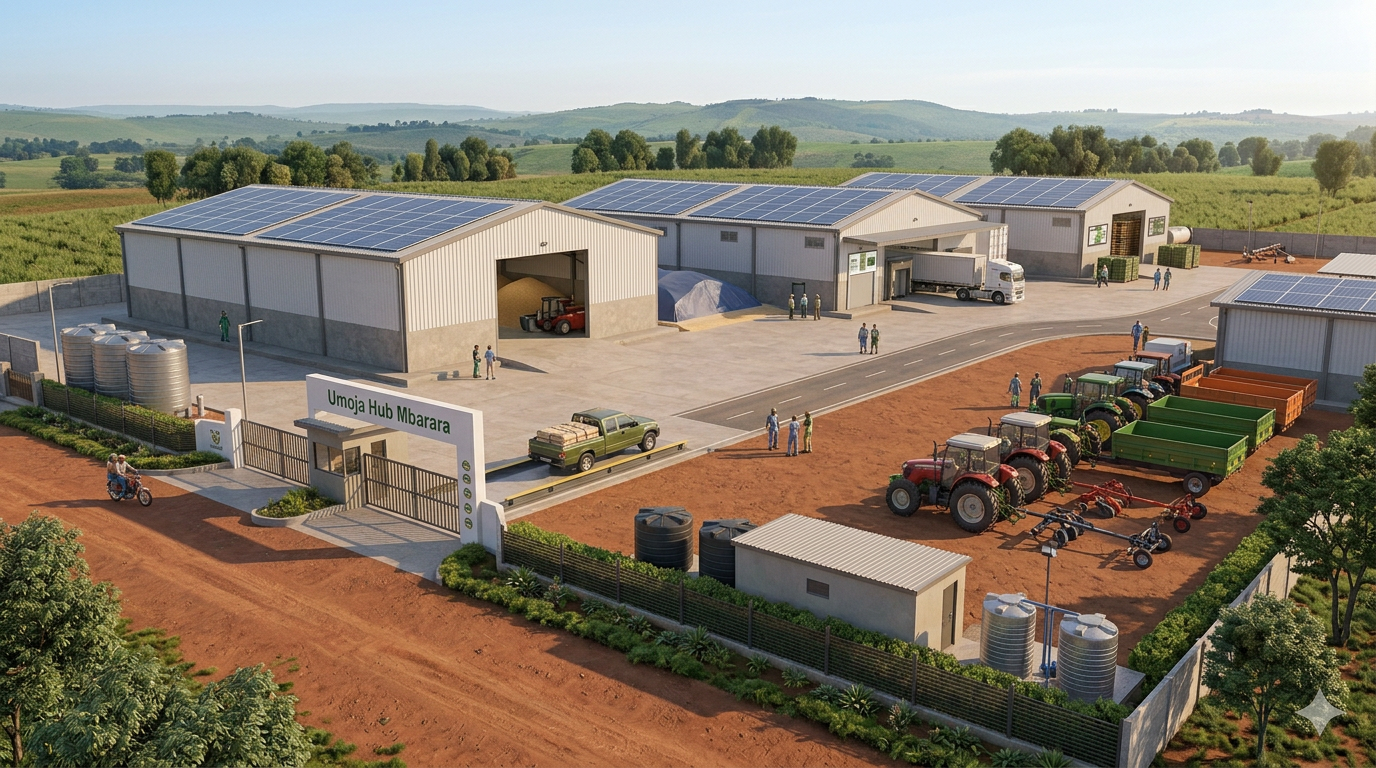
Umoja Hub, Mbarara is being developed as the pilot hub for a new generation of resilient, integrated agricultural service hubs designed to transform how farmers produce, store, and sell. Built in one of Uganda’s strongest agricultural regions, this first hub will combine grain aggregation, farmer services, milk collection support, market coordination, and value-preserving storage in one practical location.
About This Hub
Umoja Hub, Mbarara is being developed as the pilot hub for a new generation of resilient, integrated agricultural service hubs designed to transform how farmers produce, store, and sell. Built in one of Uganda’s strongest agricultural regions, this first hub will combine grain aggregation, farmer services, milk collection support, market coordination, and value-preserving storage in one practical location. More than a warehouse, Umoja Hub is designed as an agro-industrial service hub — a place where farmers gain access to inputs, knowledge, storage, contracts, and stronger markets. It is being created to reduce post-harvest loss, improve quality, support more reliable incomes, and help agriculture move from fragmented selling to organized value chains. The pilot will also lay the foundation for a wider network of hubs that are built to be resilient, data-informed, and responsive to both local needs and global market shifts.
At the heart of Umoja Hub is a simple idea: storage is not just about space — it is about value preservation. Too often, farmers are forced to sell early, sell cheaply, or lose product quality because they lack the right systems after harvest. Umoja Hub is being designed to change that. By combining dry bulk storage, cold-chain capacity, and specialty ambient storage with better logistics and farmer coordination, the hub will help preserve crop quality, improve timing of sale, and create access to more rewarding buyers. This means a bag of grain is not simply stored; its market value is protected. A crate of export fruit is not simply held; its condition, traceability, and destination are managed with care.
What makes this pilot especially powerful is that it will not only respond to what farmers are growing today — it will also help shape what they can profitably grow tomorrow. Umoja Hub will use advanced data analytics, market intelligence, and global purchase trends to identify crops with rising demand and to organize farmers around those opportunities early. In practical terms, that means the hub can support contract farming for crops where future demand is likely to grow, rather than waiting until the market is already saturated. For example, if international demand signals suggest rising interest in chia seed over the next few years, Umoja Hub can begin offering farmers structured contracts, input support, and storage solutions ahead of time, helping them enter the market early and at scale. This is the difference between reacting to the market and being prepared for it.
As a pilot, Umoja Hub, Mbarara will focus on a balanced portfolio of traditional crops and high-value crops. Traditional crops such as maize, beans, and soybeans remain essential because they provide strong farmer participation, local relevance, and dependable aggregation volume. At the same time, higher-value crops such as chia seed, Hass avocado, and macadamia represent the future of better margins, stronger offtake arrangements, and premium market access. By combining both categories, the hub becomes more resilient: staples provide consistency, while export-oriented crops provide upside. This mixed model is one of the reasons the hub is designed to work in real-world conditions rather than as a narrow single-crop project.
Umoja Hub is also being planned with resilience in mind. Resilience means the hub is not dependent on a single crop, a single buyer, or a single season. It means the infrastructure can support different commodities as market conditions evolve. It means the hub can protect value during harvest gluts, hold quality through better storage, and redirect sourcing based on opportunity. It also means combining services that strengthen the whole farmer ecosystem: crop aggregation, milk collection support, farmer training, input access, and market linkage. In a world where prices shift, climate pressures are rising, and buyers demand better quality and traceability, resilient hubs will matter more than ever.
For export crops, the hub will go beyond basic warehousing by incorporating ambient specialty storage and controlled handling systems suited to premium produce. This is especially important for fruits and specialty crops destined for higher-value markets. Not all export produce belongs in the same room, and not all value is preserved through refrigeration alone. Some fruits and specialty products require ambient storage conditions with careful airflow, cleanliness, separation, humidity management, and handling discipline to maintain export quality before dispatch. This matters for crops such as Hass avocado at pre-shipment stages and for specialty products such as macadamia and similar high-value produce where quality loss can quickly become price loss. By including export-oriented ambient storage as part of the hub design, Umoja Hub strengthens its role not only as a collection point, but as a quality-preserving market gateway.
The pilot hub in Mbarara is therefore more than a facility. It is a working demonstration of a better agricultural system. It shows how a hub can support farmers before planting, during production, at harvest, and after harvest. It shows how storage can become a financial tool, not just an operational one. It shows how analytics and forward contracts can help farmers participate in future demand, not just current distress sales. And it shows how regional agriculture can become more organized, more investable, and more connected to both domestic and international buyers.
What Umoja Hub, Mbarara will offer
Grain collection, grading, and safe storage
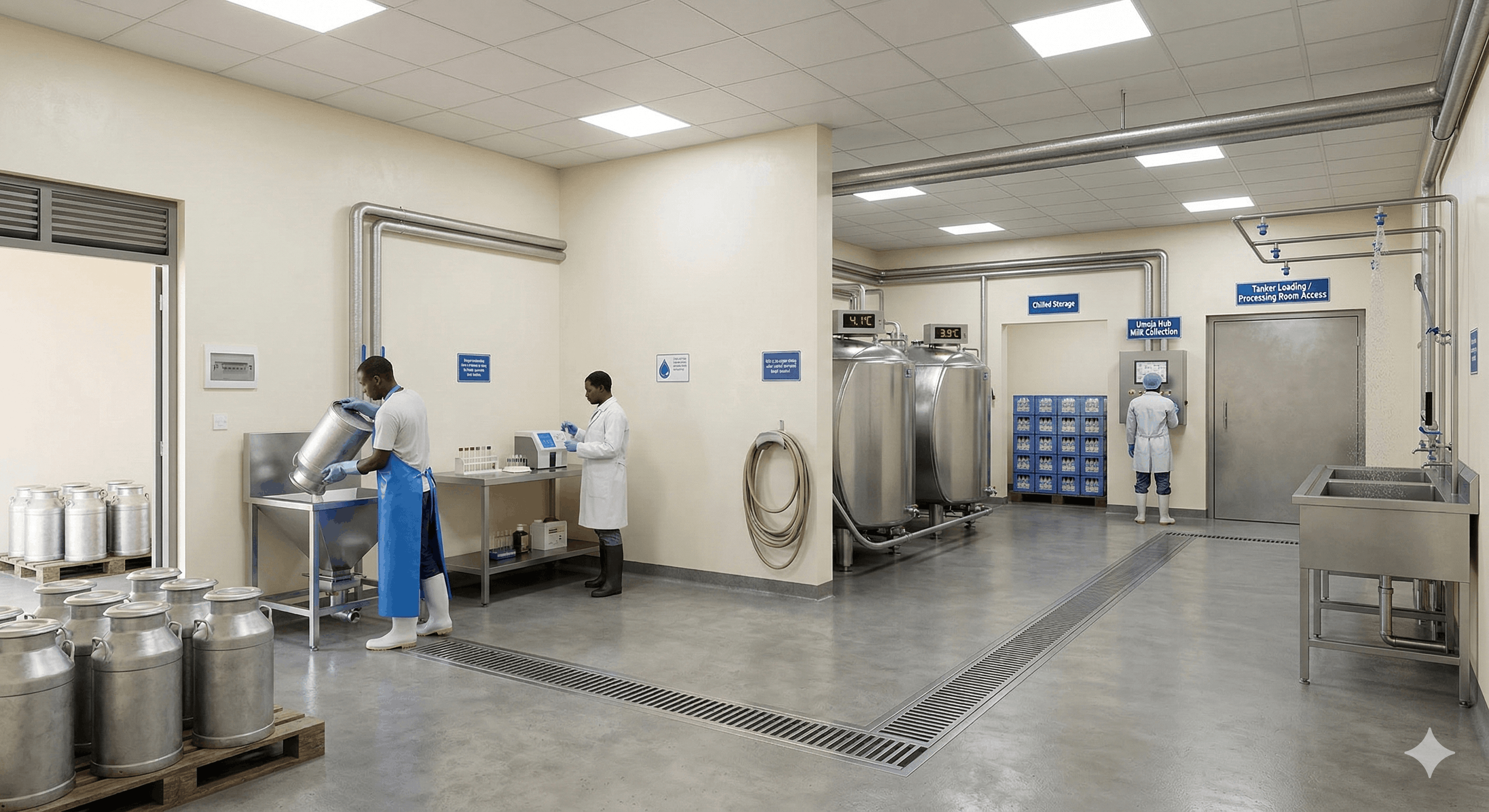
Milk collection support and cooling coordination
Farmer training and extension services
Input access and crop advisory services
Structured offtake and market linkage
Value-preserving storage for traditional and export crops
Data-informed crop selection and planning
A resilient mixed-commodity hub model designed for growth
Development Timeline
Ubuntu Capital carried out a feasibility study to identify the hub's location, target crops, commodity mix, and business case which were approved.
Layout finalized for grain/crop storage, service block, crop intake, machinery yard, and any dairy-processing export modules
Construction approvals, warehouse licensing, and cold-chain processing compliance steps initiated
Identifying target farmer groups, cooperatives, acreage, and commodity clusters
Advancing buyer discussions and anchoring offtake relationships or demand channels for the hub's agricultural produce.
Civil works begin on roads, yards, utilities, service buildings, and storage structures
Warehouse, silos, cold rooms, milk cooling, or blast freezer systems installed depending on hub type
Power, water, drainage, solar backup, and digital connectivity working
Soil lab, input distribution, training, and extension support activated
Want to bring contract farming to Mbarara?
We're looking for government partners, investors, and community leaders who share our vision of ending rural poverty through guaranteed markets.
Get InvolvedBacked by Capital. Driven by Community.
Strategic partners & institutional supporters